
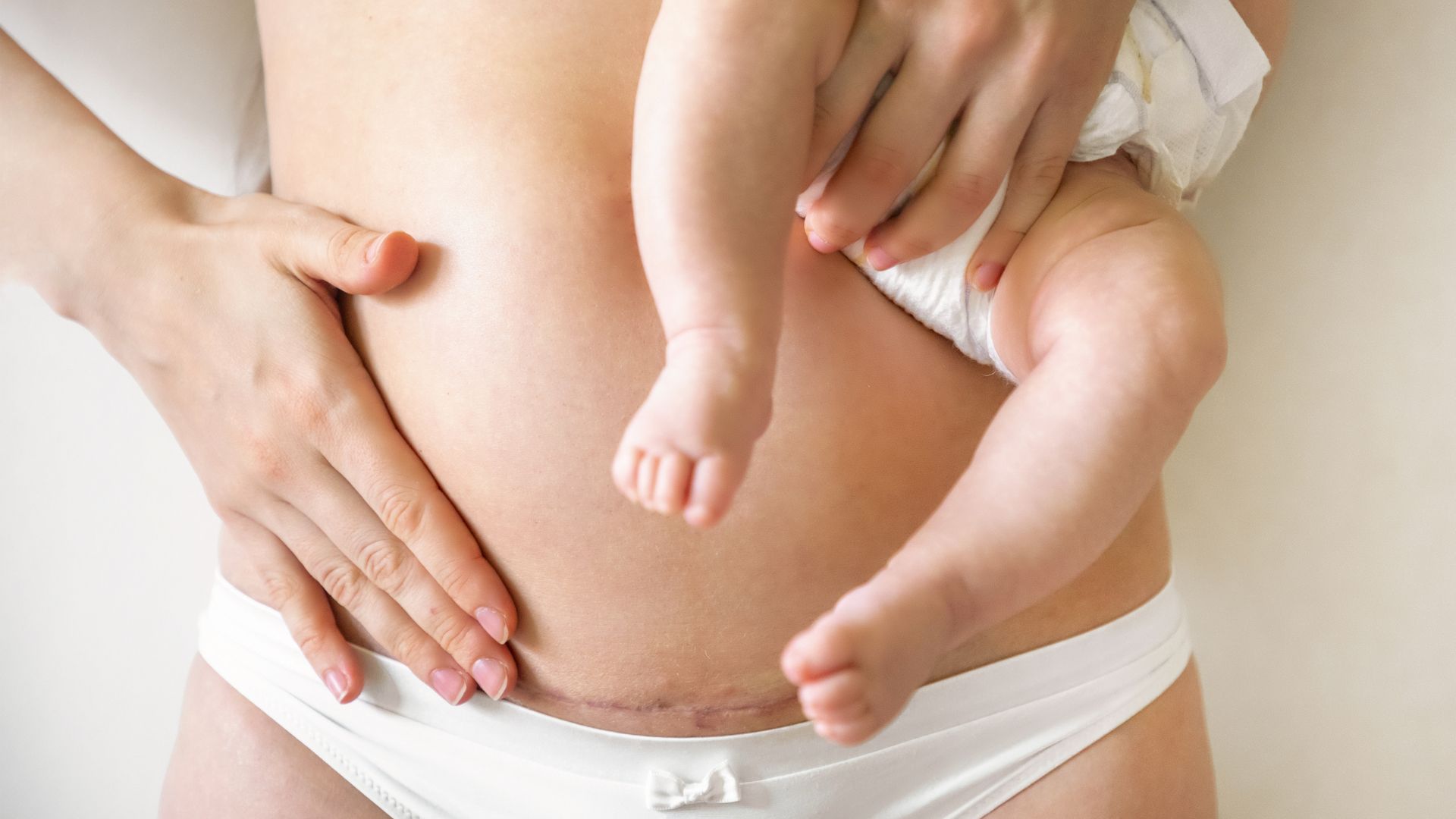
A cesarean birth requires incision through several layers of tissue. A C-section requires cutting through the skin, uterus, and fat, making it a significant surgical procedure. As these layers heal, many mothers experience incision pain along with common postpartum symptoms such as vaginal bleeding and cramping that can feel similar to menstrual cramps.
Let’s walk through the type of c-section pain, how long it lasts, what to watch out for, and how to alleviate it.
Understanding C-Section Incision Pain: What’s Actually Happening?
When you experience c-section incision pain, it’s not just coming from the small external scar you see on your abdomen. The scar is typically located along the bikini line, which helps minimize visible scarring. During a cesarean birth, several layers of tissue are involved in the surgery, including: Skin, fat tissue, fascia (connective tissue that stabilizes your core), abdominal muscles, and the uterus.
C-section surgery involves cutting through these layers, which contributes to the healing process and the formation of the scar. The scar includes both the surface scar you see and deeper tissue involvement, which can affect pain and healing. Each of these layers must heal after the procedure.
In addition to the incision itself, several other factors contribute to pain, including:
- Nerve disruption: Small nerves are cut during surgery. As these nerves regenerate, they may cause sensations such as burning, tingling, or sharp shooting pain. Small nerves disrupted during C-section surgery may also cause sharp, stabbing, burning, or ‘pins and needles’ sensations.
- Internal swelling and inflammation: Surgery triggers an inflammatory response, which can cause tenderness and pressure around the incision site.
- Scar tissue formation: As your body repairs itself, scar tissue forms to close and stabilize the incision.
- Hormonal shifts affecting healing: Postpartum hormones influence everything from inflammation to tissue repair, which can impact how your incision feels during recovery.
All of these processes are part of your body’s natural healing response. Understanding this can help normalize why pain from a cesarean section can feel complex and sometimes unpredictable.
Types of C-Section Pain
Every woman’s recovery varies slightly. However, some common symptoms include tenderness, burning sensation, redness, swelling, and pain when pressure is applied. These symptoms can make the area feel particularly painful, especially in the days and weeks following surgery.
- Burning or stinging pain: This often occurs when nerves begin repairing themselves. Although uncomfortable, this type of incisional pain can signal nerve regeneration.
- Deep soreness or pulling sensation: Many women feel deep internal soreness in the lower abdomen when moving, standing, or changing positions.
- Numbness around the incision: Numbness is extremely common after a cesarean birth. Nerve pathways were interrupted during surgery, and sensation may take months to return fully.
- Sharp shooting pains: Occasional sharp pains can occur as nerves reconnect. These sensations are usually brief and sporadic.
- Itching as the scar heals: As skin heals and nerves regenerate, itching around the incision is common.
- Pressure or heaviness when standing: Because your abdominal muscles were affected during surgery, you may feel heaviness when standing upright.
- Tenderness when moving or coughing: The abdominal wall supports many everyday movements, so coughing, laughing, or rolling in bed may temporarily increase discomfort. While these sensations can feel concerning, many of them are normal parts of the healing process.
How Long Does C Section Incision Hurt?
This is one of the most common questions that new mothers ask. During the first two weeks, your body is also working to regulate postpartum bleeding. Passing small blood clots can be common during this time, but very large clots or sudden increases in bleeding should always be discussed with your provider. Most women experience pain and discomfort for several weeks after a C-section, as the body gradually recovers. Your C-section incision will take about 6 weeks to heal on the skin level, but full recovery may take up to 12 months. Healing typically occurs in stages. Let’s walk through them:
First 1–2 Weeks
During the first two weeks after birth, pain is usually the most intense. You may experience:
- Significant c-section incision pain
- Difficulty standing fully upright
- Limited mobility
- Needing assistance with daily tasks
You may need help in the early days at home after your C-section. Your midwife will check your wound and remove stitches or staples after 5-7 days. Your midwife will visit you at home for the first few weeks to check how you and your new baby are doing after a C-section. The first few weeks are important for recovery, support, and adjusting to life with your new baby. Rest and support during this phase are essential.
Weeks 3–6
By weeks three through six, the surface incision often appears much improved. This is a key stage in your C-section recovery, as your body continues to heal both inside and out. During your hospital stay, you should have received post-operative care instructions to help guide your recovery at home. However, deeper tissues are still actively healing. You may notice:
- Intermittent pain from c section incision
- Tightness when stretching
- Sensitivity to movement
It is important to clean and dry your C-section wound carefully every day after the dressing is removed. You may need to avoid heavy activities for about 6 weeks after a C-section. Your midwife will check your wound and may remove your dressing and stitches after 5-7 days, unless you have dissolvable stitches. A healing C-section incision should stay closed and dry, with swelling and redness gradually improving. This phase can be confusing because the incision may appear healed externally, even as internal healing continues.
6 Weeks to 6 Months
Between six weeks and several months postpartum, some mothers experience:
- Nerve sensitivity
- Scar tightness
- Occasional pulling sensations
During this period, scar maturation continues to heal, and you may notice changes in its appearance and sensation. Your C-section scar will fade from red or pink to a lighter color over time; on darker skin, it may turn into a brown or white line instead of fading to a lighter shade. If your C-section scar remains raised or itchy, ask your doctor about treatments like silicone gel or scar massage to improve healing. These symptoms are often related to nerve regeneration and scar tissue remodeling.
6+ Months
Even after six months, it is normal for some women to notice:
- Mild numbness
- Occasional discomfort
- Sensitivity along the scar
Some people may experience chronic pain, which refers to long-term discomfort associated with scar tissue and can persist for months or even years after surgery. Chronic c-section scar pain occurs in up to 25% of people who have a cesarean birth. C-section scars may continue to hurt for months or even years after the scar has healed. Chronic c-section scar pain can often be treated with a combination of manual therapy and exercise. Healing timelines vary widely. If recovery takes longer than expected, this does not necessarily indicate a problem.
How to Alleviate C-Section Incision Pain Naturally
Pain Relief
Pain relief is a key part of recovery after a C-section, and managing pain effectively helps you move, care for your baby, and heal faster. It is also recommended to take it even when your doctor says so, even if you do not have pain at the moment. First-line medications for C-section pain relief typically include:
- Acetaminophen
- NSAIDs like Ibuprofen.
- Paracetamol
Gentle Movement
While rest is essential, gentle movement can actually support recovery. Helpful approaches include:
- Slow, short walks
- Standing with posture support
- Gradually increasing movement as tolerated
Scar Support (When Cleared by Provider)
Once your healthcare provider confirms your incision has healed sufficiently, scar care can help improve comfort. Options may include:
- Scar massage
- Silicone scar sheets
- Pelvic floor physical therapy
These methods can reduce tightness and improve tissue mobility.
Nutrition for Healing
Your body needs specific nutrients to repair tissue after surgery. Prioritize foods rich in:
- Protein for tissue repair
- Vitamin C for collagen production
- Zinc for wound healing
- Iron, especially if blood loss occurred during birth
Proper nutrition plays a significant role in reducing pain from C-section incisions and supporting long-term recovery.
Supportive Tools
Certain tools can make daily life more comfortable during healing:
- Belly binders for temporary abdominal support
- Holding a pillow against the abdomen when coughing or laughing
- Heating pads (away from the incision site)
- Ice packs in the early days to reduce inflammation
Nervous System Support
Healing is not only physical, but your nervous system also plays a major role in recovery. Support your body by prioritizing:
- Deep breathing
- Stress reduction
- Sleep whenever possible
Remember: healing is not linear. Resting when your body asks for it is not weakness; it is part of recovery.
Signs of C-Section Incision Infection to Watch For
While discomfort is normal, symptoms like heavy vaginal bleeding or unexplained chest pain should be taken seriously and evaluated by a healthcare provider immediately. Contact your provider if you notice the following symptoms:
- Increasing redness spreading outward from the incision
- Worsening swelling
- Warmth around the incision
- Pus or unusual discharge
- Fever over 100.4°F
- Foul odor from the incision
- Severe or worsening pain in the incision area
- The incision opening
Be aware of other symptoms such as tenderness, burning, difficulty moving, or increased sensitivity around the scar, as these can also indicate complications. Contact your healthcare provider if you experience signs of infection, such as increased redness, swelling, or discharge from the incision, if pain worsens, or the wound leaks or opens.
If you experience heavy bleeding after a C-section. You should seek medical advice or see your GP straight away for prompt medical advice. Trust your instincts. If something does not feel right, it is always appropriate to seek medical care.
When to Consult a Doctor for Persistent C-Section Pain
It’s also important to understand when to consult a doctor for persistent C-section pain. Consider speaking with a healthcare provider if:
- Pain lasts beyond 8–12 weeks without improvement.
- You experience severe burning or nerve pain.
- Pain interferes with daily movement.
- You notice signs of infection.
- Pain is accompanied by fever.
- Heavy bleeding or abnormal discharge occurs.
- Emotional distress is connected to your recovery.
Sometimes, persistent c-section incision pain may be related to underlying issues such as: Adhesions (internal scar tissue), Nerve entrapment, Pelvic floor dysfunction, Hernia
Emotional Healing Matters Too
Physical healing is only one part of postpartum recovery. Whether you have a vaginal delivery or a cesarean delivery, an unexpected C-section can bring complex emotions, which include sudden mood swings, fatigue, and anxiety. It’s also important to recognize the signs of postpartum depression, which can sometimes develop alongside the physical recovery process. These emotions are valid, and no mother should feel compelled to handle them alone.
Speaking with a postpartum specialist or joining a support group can provide a safe space to process your experience and receive guidance. If you are experiencing symptoms of postpartum depression or emotional distress during recovery, reaching out for help is an important step toward healing.
The Bottom Line
Recovering from a cesarean birth requires patience and compassion toward your body after all, you just underwent major surgery while bringing a new life into the world, and that deserves deep respect. If you are currently experiencing c-section incision pain, know that healing takes time, discomfort is a normal part of the process, and reaching out for help is a sign of strength, not weakness. You do not have to navigate this journey alone. Whether you need pelvic floor therapy, nutritional guidance, postpartum recovery assessments, or a personalized care plan, there are resources available to support every stage of your recovery. Consider booking a consultation with us so we can walk alongside you every step of the way.
FAQ
Is it normal to still have pain 3 months after a C-section?
- Yes, it can be normal for some mothers to experience mild C-section incision pain or occasional pain even three months after C-section childbirth. Although the incision on the surface may appear fully healed, the deeper tissues and nerves can take longer to recover. If you experience severe pain, increasing discomfort, or symptoms like large blood clots, it’s important to contact your healthcare provider for evaluation.
Why does my C-section scar burn?
- A burning sensation around your scar is often related to nerve healing after surgery. During the delivery, small nerves are disrupted when the incision is made, and as they regenerate, they can cause burning, tingling, or stinging sensations. If the burning becomes intense or develops into severe pain, it’s best to discuss it with your healthcare provider.
Can nerve pain after a C-section go away?
- Yes, nerve-related pain from c section incision often improves over time as the body continues to heal after childbirth. Nerve regeneration can take several weeks or even months, which is why some mothers notice occasional sensitivity around the scar even after the incision appears fully healed.
When can I start scar massage?
- Scar massage is typically recommended once the incision is fully healed and the skin has completely closed, which is often around 6 weeks postpartum. However, every recovery is different, so it’s important to confirm with your healthcare provider first.
How can I sleep comfortably after a C-section?
- Many mothers find relief by sleeping on their back with pillows supporting their knees, or on their side with a pillow between their legs to reduce pressure on the abdomen. Using extra pillows when changing positions can also help minimize pain.
Postnatal Depletion
Meet the Team
Our Services
Supplements
A virtual healthcare clinic that helps postpartum mamas recover from postnatal depletion syndrome with a holistic approach.
Welcome to Postpartum Care USA


Get in touch