

It’s 5:42 p.m. The baby is crying. Your toddler is asking for a snack for the third time. Dinner isn’t started. You haven’t sat down all day.
Your partner walks in and asks a simple question.
And something inside you snaps.
Your voice gets louder than you meant it to. You slam a cabinet a little harder than necessary. Maybe you yell. Maybe you cry afterward. Maybe you sit in the bathroom feeling flooded with guilt, wondering, What just happened to me?
An hour later, you replay it in your head.
“I used to be patient.” “Why am I so angry?” “Why have I become this person after having a baby?”
If this sounds familiar, you are not a bad mother. Experiencing postpartum rage does not make you a bad mom—these feelings are common and do not define your worth as a parent.
And you are not alone.
Postpartum rage is more common than most people realize. It just isn’t talked about as openly as postpartum depression or anxiety. Many women feel ashamed of the anger, so they stay quiet about it. Many new moms experience these intense emotions, and new mothers should know they are not alone in facing these challenges.
In fact, postpartum rage affects up to 1 in 4 women within the first year postpartum, making it a significant but often overlooked issue.
But postpartum anger is real. Postnatal rage is real. And it deserves to be understood. The Cleveland Clinic recognizes postpartum rage as a real and important postpartum mental health concern, offering expert guidance and support for those affected.
The emotional aftermath of postpartum rage often includes shame, guilt, and fear about parenting abilities, leaving many mothers questioning themselves even more.
In this article, we’re going to talk about what postpartum rage actually is, what postpartum rage symptoms can look like, what causes postpartum rage, and how it connects to both postpartum depression and postpartum anxiety. Most importantly, we’ll talk about how to treat postpartum rage in a way that addresses the root cause.
Because for many women, postpartum anger is not just emotional. It’s physiological.
What is Postpartum Rage?
Postpartum rage is a pattern of intense anger, irritability, or emotional outbursts that develop after having a baby. It is sometimes referred to as postnatal rage or postpartum anger, and while it is not always discussed as openly as postpartum depression, it is often part of the same spectrum of perinatal mood disorders (Source). Postpartum rage is not an official diagnosis but is recognized by healthcare providers as a symptom linked to perinatal mood disorders.
For some women, postpartum rage shows up as yelling more than they used to, feeling overstimulated by noise or touch, or reacting strongly to situations that previously would not have felt overwhelming. Others notice a short fuse with their partner, increased irritation over small disruptions, physical tension in their body, or explosive reactions that are followed quickly by guilt and regret. Many describe it as feeling constantly on edge, as though their nervous system is wound too tight.
One of the most distressing aspects of postpartum rage is how sudden it can feel. A mother may feel relatively calm in one moment, and then experience a surge of anger that seems disproportionate to the situation. Postpartum rage can affect anyone who recently gave birth and is most common within the first six weeks to one year after childbirth. Afterward, the shame often sets in. Thoughts like, “Why am I acting like this?” or “This isn’t who I am,” are common. Many women grieve the version of themselves who felt more patient or steady before having a baby.
Postpartum rage frequently overlaps with postpartum depression and anxiety disorders. While depression is often associated with sadness and anxiety with worry, both conditions can also present with irritability and anger. In fact, for some women, anger is the most visible symptom of an underlying mood disorder. Rather than being a character flaw or failure, postpartum rage is often a signal that the brain and nervous system are under strain and need support.
Postpartum Rage Symptoms
Common symptoms of postpartum rage can look different from one mother to another, but they often involve intense anger that feels difficult to control. A woman who is experiencing postpartum rage may notice constant irritability, heightened sensitivity to noise or touch, or a tendency to snap at loved ones over situations that would not have triggered such a strong reaction in the past. Physical signs are common as well, including a tight jaw, clenched fists, a racing heart, or a general sense of agitation in the body. Physical symptoms of postpartum rage can also include a racing heart, clenched jaw, and feelings of ‘blood boiling’.
Many mothers describe intense feelings that seem to build quickly and then spill over. They may have racing thoughts during or after an outburst and find it hard to calm down once they are upset. Afterward, guilt and regret often follow, along with a sense of being emotionally overwhelmed. Approximately 21-31% of new mothers report experiencing significant anger in the postpartum period. This cycle can be exhausting and confusing, especially when a woman does not recognize these symptoms as part of a broader mental health picture.
For some, postpartum rage occurs on its own. For others, it overlaps with postpartum depression or anxiety disorders, both of which fall under the umbrella of perinatal mood disorders. In these cases, anger may be one expression of a deeper imbalance, rather than the only issue at play. Many mothers experience feelings of rage, guilt, and overwhelm during this time. Understanding these symptoms in the context of mental health can help remove shame and open the door to appropriate support and treatment.
Postpartum Rage and Depression
When we talk about maternal mental health, many people still picture postpartum depression as constant sadness or crying. While that can certainly be part of the experience, depression does not always look the way we expect. In some women, it shows up less as tears and more as irritability, frustration, or what many describe as “mom rage.”
Depression is a form of mental illness, and like other mood disorders, it can affect how the brain regulates stress and emotion. When you are depleted, exhausted, and running on empty, your nervous system has less capacity to pause before reacting. As a result, postpartum rage and depression often overlap. Some women develop feelings of rage alongside depressive symptoms, while others may develop feelings of anger or rage independently of depression. It is possible to experience rage without feeling depressed, and having postpartum depression doesn’t mean you’ll also develop feelings of rage. Experiencing rage can occur on its own, and it is important to recognize postpartum rage as a distinct, often misunderstood issue that can coexist with other postpartum symptoms.
You may notice:
- A persistently low mood
- Loss of joy or interest in things you used to enjoy
- Ongoing fatigue that feels heavier than normal sleep deprivation
- Increased irritability
- Emotional numbness or disconnection
- Anger directed inward, including harsh self-criticism
A family history of mental illness can increase the risk of postpartum depression and mood disorder symptoms, especially when combined with stressful life events and lack of social support.
In these cases, anger can be the “loud” symptom of an underlying depressive state. It may feel easier for the body to express frustration outward than to sit with sadness or hopelessness. Recognizing this connection is important because treating postpartum depression can often reduce the intensity of mom rage as well.
It is also important to distinguish postpartum rage and depression from postpartum psychosis, which is rare but serious and involves symptoms such as hallucinations, delusions, or severe confusion. If there are signs of postpartum psychosis or thoughts of harm to yourself or your baby, immediate medical attention is necessary. Supporting maternal mental health means understanding the full spectrum of conditions and responding appropriately.
Postpartum Rage and Anxiety
There is a strong connection between postpartum rage and anxiety, especially during the postpartum period when the nervous system is already under significant strain. Anxiety disorders are one of the most common forms of mood disruption after having a baby, and they do not always look like panic attacks or visible fear. Sometimes, anxiety shows up as irritability, tension, and a quick temper.
An anxious nervous system is a hyper-alert nervous system. When your body feels constantly on edge, your brain becomes more sensitive to perceived threats. Small triggers can feel much bigger than they are. A crying baby, a messy kitchen, or a simple question from your partner can register as overwhelming. Your reactions may feel sharper or more intense because your system is already operating in fight-or-flight mode.
Postpartum anxiety can present with:
- Constant or intrusive worry
- Racing thoughts that are hard to quiet
- Intrusive thoughts, which are unwanted or distressing thoughts that can occur due to hormonal fluctuations and postpartum mood disorders
- Increased irritability
- Difficulty falling or staying asleep, even when the baby is sleeping
- Feeling overstimulated by noise, touch, or multiple demands
- Snapping or reacting quickly when overwhelmed
In this context, anger can be a symptom of postpartum anxiety rather than a separate issue. It may be the outward expression of internal anxiety that has been building beneath the surface. Recognizing postpartum rage as part of a broader pattern of mood disruption can help guide appropriate support and treatment during the postpartum period.
Why Have I Become So Angry After Having a Baby?
This is one of the most common questions we hear in our clinic.
“Why have I become so angry after having a baby?”
The answer is rarely simple. While motherhood is undeniably exhausting and sleep deprivation makes everything harder, there is often much more happening beneath the surface. After giving birth, women experience a range of emotional and physical changes that can impact their mental health.
During the postpartum period, your body undergoes dramatic physiological changes. Estrogen and progesterone levels, which were elevated throughout pregnancy, drop rapidly after delivery. These hormonal changes and fluctuations in hormone levels play a significant role in regulating mood, serotonin, and emotional stability. When estrogen and progesterone levels shift so quickly, the brain must adjust just as rapidly. For some women, this hormonal crash contributes to mood disruption that can feel intense and unfamiliar.
In addition to hormonal shifts, many women experience blood loss during birth, nutrient depletion from pregnancy and breastfeeding, ongoing sleep fragmentation, blood sugar instability, and increased stress demands. Each of these factors affects the nervous system and brain chemistry. Lifestyle changes, such as new routines, disrupted sleep patterns, and increased responsibilities, can further contribute to postpartum rage. Identifying specific triggers, such as lack of sleep or sensory overload, is crucial for managing postpartum rage. When combined, these factors can create the perfect storm for irritability and emotional volatility.
Postpartum rage can be a symptom of postpartum mood disorders, including postnatal depression and anxiety. While sadness is often highlighted in conversations about postnatal depression, anger and irritability are also common presentations. In some cases, intense anger may be the most visible symptom of postpartum mood disorders rather than persistent sadness. Mood changes, including emotional fluctuations and instability, are common during this time and can be managed with support and intervention.
When your body is depleted and your hormones are shifting, your brain feels it. Emotional regulation becomes harder. Patience feels thinner. Small stressors feel bigger.
Rage in the postpartum period is often not a personality change. It is a signal that your system is under strain and needs support.
What Causes Postpartum Rage?
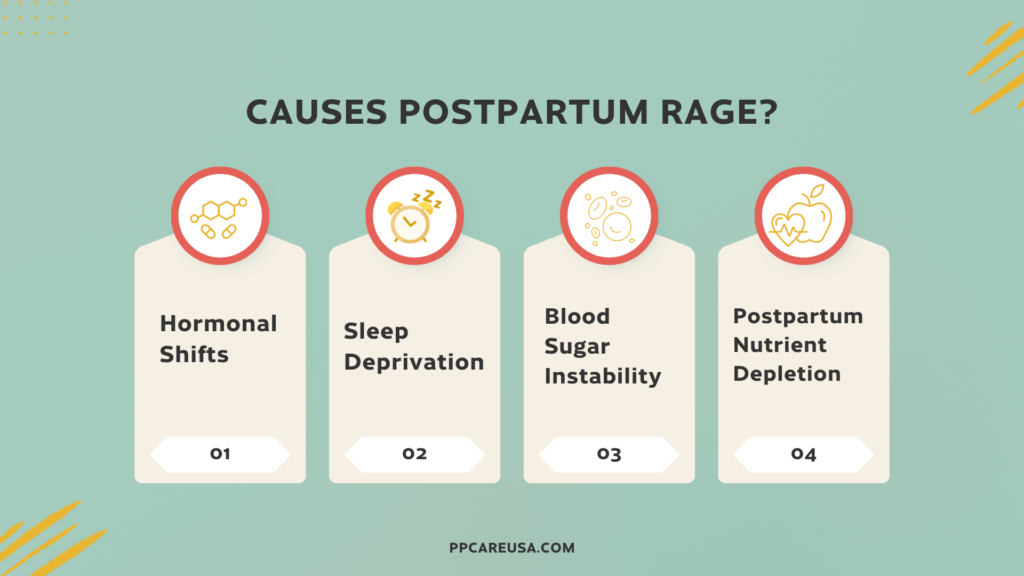
Let’s talk about the root causes of the emotional instability you may feel. Postpartum rage rarely appears out of nowhere. It usually develops when multiple stressors build on top of one another. The rage response is part of the body’s fight-or-flight reaction, often manifesting physically through symptoms like increased heart rate and muscle tension. Understanding the biological and lifestyle risk factors can help you see that these feelings of rage are not random — they are often the result of a body and brain under strain.
1. Hormonal Shifts
After delivery, estrogen and progesterone levels drop dramatically within a matter of days. These hormones influence serotonin and dopamine, two key neurotransmitters that regulate mood, motivation, and emotional steadiness. When estrogen and progesterone fall quickly, the brain must recalibrate just as quickly.
For some women, that rapid shift contributes to mood instability and makes it harder to stay grounded in the present moment. You may notice that you react before you have time to think. Small frustrations can trigger intense feelings that seem out of proportion to what is happening. Hormonal shifts are one of the primary biological risk factors for postpartum mood disruption, and they can set the stage for irritability or feelings of rage to develop more easily. It is also important to recognize that bipolar disorder is another mental health condition that can influence postpartum mood changes and should be considered as part of a comprehensive assessment for new mothers experiencing mood symptoms.
2. Sleep Deprivation
Sleep deprivation is not just tiring; it directly affects the brain’s ability to regulate emotion. The prefrontal cortex, which helps you pause, reflect, and respond thoughtfully, becomes less active when you are chronically sleep deprived. At the same time, the amygdala — the part of the brain responsible for threat detection — becomes more reactive.
This imbalance makes it harder to stay calm in the present moment. You may find that your reactions are quicker and stronger, and that it takes longer to recover once you are upset. Over time, ongoing sleep disruption becomes a significant risk factor for postpartum mood instability. It lowers your threshold for frustration and makes intense feelings more likely to surface.
3. Blood Sugar Instability
Many postpartum women are unintentionally under-eating. They skip meals while caring for the baby, rely heavily on coffee, or go long stretches without enough protein. When blood sugar levels drop or fluctuate rapidly, the brain perceives this as stress.
Low or unstable blood sugar can trigger irritability, anxiety, shakiness, and mood swings. In those moments, it can feel as though anger appears suddenly, but often the body has been under-fueled for hours. Your brain depends on steady glucose levels to function calmly and clearly. Without that stability, it becomes harder to regulate intense feelings, and feelings of rage may develop more quickly in response to everyday stressors.
4. Postpartum Nutrient Depletion
This is one of the most overlooked contributors to postpartum rage. Pregnancy and birth place heavy demands on nutrient stores. Breastfeeding continues that demand. If you experienced significant blood loss during delivery, depletion may be even greater.
Key nutrients that influence mood regulation include iron, ferritin, magnesium, B vitamins, zinc, and omega-3 fatty acids. These nutrients are essential for neurotransmitter production and nervous system balance.
Low iron alone can contribute to fatigue, brain fog, anxiety, and irritability. Iron is required for dopamine production, and dopamine plays a major role in motivation, reward, and emotional regulation. When iron stores drop, mood stability can suffer, and it becomes harder to stay steady in the present moment.
Magnesium supports nervous system calm and helps regulate the stress response. B vitamins are critical for producing serotonin and dopamine. Omega-3 fatty acids help regulate inflammation and support healthy brain signaling. When these nutrients are depleted, the nervous system becomes more reactive. That reactivity can feel like sudden anger or overwhelming frustration.
Nutrient depletion is an important risk factor for postpartum mood instability, yet it is often overlooked. When the body is not adequately nourished, the brain struggles to maintain emotional balance. Over time, this can lead to intense feelings and recurring feelings of rage that feel confusing or frightening.
Recognizing these root causes helps shift the conversation. Postpartum rage is not simply about personality or willpower. It often reflects underlying biological stress that deserves thoughtful support and care.
Impact on Daily Life and Relationships
Postpartum rage doesn’t just affect how you feel in the moment—it can ripple through every aspect of your daily life and relationships. The intense anger and emotional instability that often accompany postpartum depression, anxiety disorders, and other perinatal mood disorders can make even simple tasks feel overwhelming. Many mothers find themselves struggling to keep up with household responsibilities, care for their baby, or maintain routines that once felt manageable. The constant mood disruption and sleep deprivation that often go hand-in-hand with postpartum rage can leave you feeling exhausted, irritable, and disconnected from the present moment.
These intense emotions can also strain relationships with partners, family members, and friends. Arguments may become more frequent, misunderstandings can escalate quickly, and the sense of closeness or intimacy you once shared may feel out of reach. For some mothers, the guilt and shame that follow episodes of anger can lead to withdrawal and isolation, making it even harder to ask for help or explain what you’re experiencing. The stigma surrounding postpartum rage and other mental health conditions can make it feel like you’re the only one struggling, when in reality, many mothers experience similar challenges.
It’s important to remember that postpartum rage is often a symptom of underlying mental health conditions such as postpartum depression and anxiety. Addressing these root causes with the help of healthcare providers can make a significant difference. Treatment options like cognitive behavioral therapy, selective serotonin reuptake inhibitors, and other forms of support can help manage symptoms and restore emotional balance. Support groups, such as those offered by Postpartum Support International, provide a safe space to connect with others who understand what you’re going through, reducing feelings of loneliness and offering practical advice for coping with daily life.
Practicing self-compassion and prioritizing self-care are also essential steps in recovery. Allowing yourself grace, seeking support, and recognizing that you are not alone can help break the cycle of shame and isolation. By addressing both the emotional and physiological aspects of postpartum rage, mothers can begin to rebuild their sense of self, strengthen their relationships, and create a more supportive environment for themselves and their families.
Ultimately, the impact of postpartum rage on daily life and relationships underscores the need for greater awareness, compassion, and accessible treatment options for all mothers experiencing perinatal mood disorders. With the right support, it is possible to manage intense anger, improve mental health, and restore connection and joy to daily life.
How to Treat Postpartum Rage
If you are wondering how to treat postpartum rage, the answer is not simply to “try harder” or force yourself to be calmer. Rage is often a signal that something deeper needs attention. Treatment works best when it supports both your mental health and your physical health. If symptoms persist or worsen, it is important to seek support from a mental health professional or trusted provider.
Effective strategies for managing postpartum rage include practicing deep breathing, taking short breaks when you feel overwhelmed, and seeking support from loved ones or professionals. Prioritizing sleep and explicitly asking for help with household tasks can help reduce stress and make daily life more manageable. Joining a support group can help you feel less alone during the postpartum period, as connecting with others who understand your experience can be very validating. Adjusting your expectations for yourself and your household can also help reduce frustration and feelings of inadequacy.
Talking to a trusted partner, friend, or provider about your feelings can be a powerful step toward healing. Postpartum Support International (PSI) provides resources and free virtual support groups specifically for postpartum rage. The National Alliance on Mental Illness (national alliance) is another valuable resource for social support and mental health awareness. If you are experiencing a mental health crisis or thoughts of self-harm, the National Suicide Prevention Lifeline offers immediate help and support. An integrative review by a mental health professional can provide a comprehensive assessment and help create a personalized treatment plan tailored to your needs.
Check Iron and Ferritin Levels
If you experienced heavy bleeding, a postpartum hemorrhage, or ongoing fatigue that feels extreme, checking your iron and ferritin levels is an important first step. Ferritin reflects your stored iron, and it can be low even when hemoglobin appears normal on basic lab work. Iron plays a key role in dopamine production and overall mood regulation. When iron stores are depleted, irritability, anxiety, and emotional volatility can increase. Rebuilding optimal iron levels can significantly improve emotional stability.
Stabilize Blood Sugar
Blood sugar instability is a common but overlooked contributor to postpartum rage. Many mothers unintentionally under-eat during the postpartum season, skipping meals or relying heavily on caffeine. Eating within an hour of waking, prioritizing protein at each meal, and avoiding long stretches without food can help steady your blood sugar. When glucose levels are stable, the brain is better able to regulate emotions. Many women notice a meaningful decrease in irritability once they begin fueling consistently.
Support the Nervous System
Your nervous system has been through a major transition. Chronic stress, broken sleep, and constant stimulation can keep your body in fight-or-flight mode. Supporting the nervous system might include magnesium supplementation when appropriate, gentle daily movement, exposure to natural sunlight, deep breathing practices, and limiting early-morning phone use. Small daily rhythms create safety in the body, and when the body feels safe, emotional reactivity often decreases.
Evaluate Hormones
If postpartum rage feels intense, persistent, or cyclical, it may be helpful to evaluate hormone function. Thyroid dysfunction, including postpartum thyroiditis, can contribute to irritability, mood swings, and emotional instability. Fluctuations in estrogen and progesterone can also affect mood regulation during the postpartum period. Identifying and addressing hormone imbalances can make a significant difference in how steady you feel day to day.
Therapy and Emotional Support
Anger rarely exists in isolation. It often carries grief, overwhelm, identity shifts, and unmet needs beneath the surface. Counseling provides a safe space to explore those layers without shame. Many women find relief simply in understanding that their experience has context and meaning. Therapy can also help develop tools for emotional regulation while the physiological pieces are being addressed.
When to Seek Professional Help
If postpartum anger feels out of control, frequent and intense, accompanied by thoughts of harming yourself or others, or paired with severe depression or anxiety, professional support is essential. Postpartum mental health conditions are treatable, and seeking help is an act of care for both you and your family.
You do not have to manage this alone. Support exists, and recovery is possible.
If you are struggling with postpartum rage symptoms and want to explore whether nutrient depletion or hormone imbalance may be contributing, we invite you to take our symptom quiz and learn more about our program.
Frequently Asked Questions
Q1. How long does postpartum rage typically last?
Ans: Postpartum rage usually shows up sometime within the first year after having a baby, though many mothers notice it in the early weeks. How long it lasts can vary depending on things like hormone changes, sleep deprivation, and overall physical recovery. With the right support and care, many women notice their symptoms gradually improve.
Q2. What are effective coping strategies for postpartum rage?
Ans: Small changes can make a big difference. Eating regular meals to keep blood sugar stable, getting as much rest as possible, and taking a few minutes to breathe or step away when you feel overwhelmed can help calm your nervous system. Talking with a partner, friend, support group, or therapist can also provide much-needed emotional support.
Q3. When should I see a doctor for postpartum rage?
Ans: If your anger feels intense, happens often, or starts affecting your relationships or daily life, it’s a good idea to talk with a healthcare provider. You should also seek help if rage comes with severe anxiety, depression, or thoughts of harming yourself or your baby. A professional can help check for hormone changes, nutrient deficiencies, or postpartum mood conditions.
Q4. How can I talk to my partner about postpartum rage?
Ans: Try to bring it up during a calm moment rather than in the middle of a stressful situation. Explain that what you’re experiencing may be connected to the physical and emotional changes that happen after childbirth. Being open about how you’re feeling and asking for specific help—like support with nighttime feedings or household tasks—can make a big difference.
Q5. Is postpartum rage a sign of postpartum depression?
Ans:It can be, but not always. For some mothers, postpartum depression shows up more as irritability or anger than sadness. In other cases, postpartum rage happens on its own as part of the emotional and hormonal shifts after childbirth. Either way, it’s a signal that your mind and body may need extra support.
Pin This For Later:



Postnatal Depletion
Meet the Team
Our Services
Supplements
A virtual healthcare clinic that helps postpartum mamas recover from postnatal depletion syndrome with a holistic approach.
Welcome to Postpartum Care USA



Get in touch