
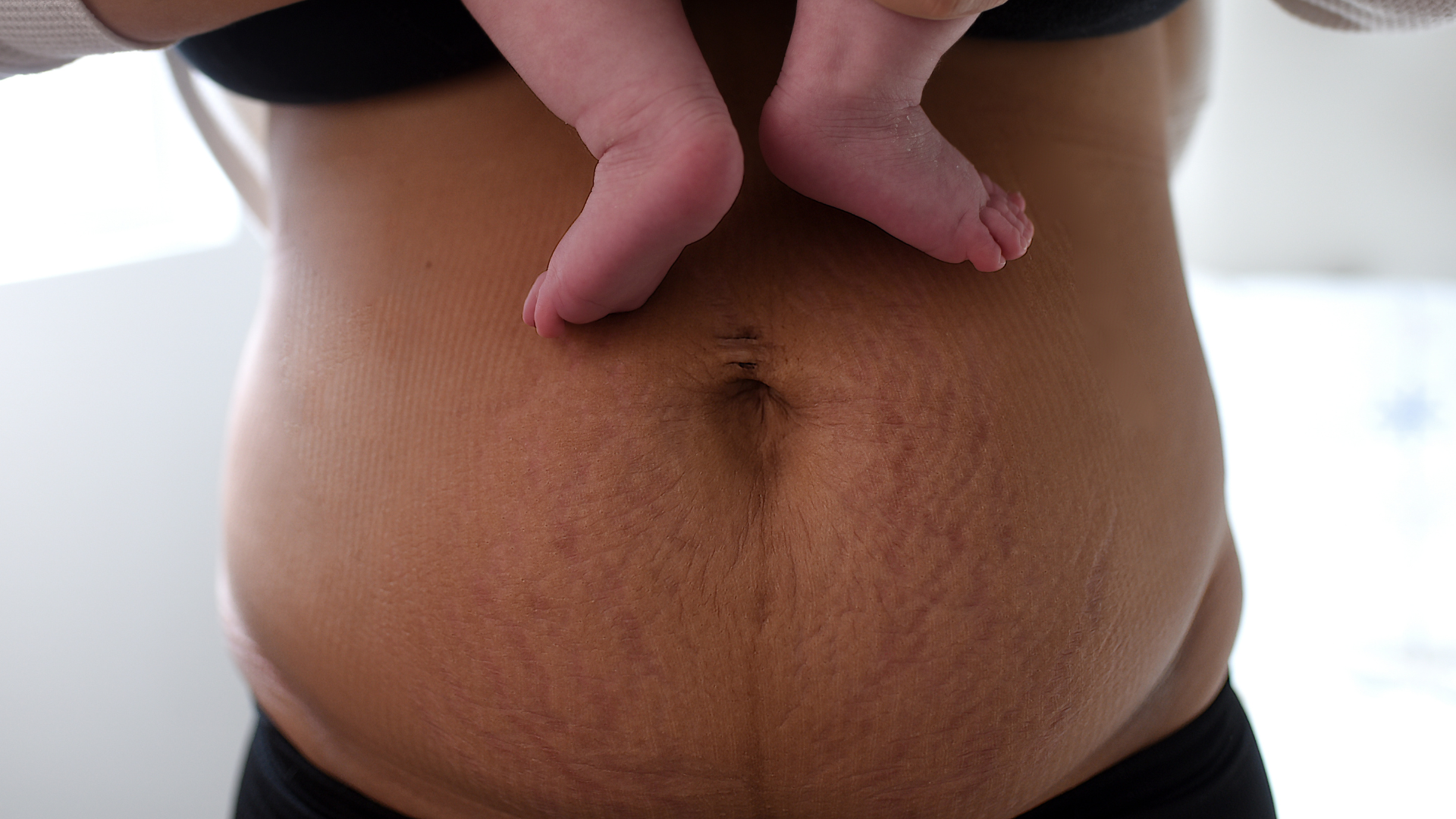
Postpartum hemorrhage is something many women don’t think about until it happens to them.
And when it does happen, it can feel terrifying.
The room moves fast. Providers are focused. You may not even fully understand what is going on in the moment. Later, you’re told, “You lost a lot of blood, but you’re okay now.”
But what does “okay” actually mean?
At Postpartum Care USA, we care for women every week who had postpartum hemorrhage years ago and are still dealing with symptoms they were never told could be connected.
Let’s walk through what postpartum hemorrhage is, what causes it, what happens if you hemorrhage after birth, the four stages of postpartum hemorrhage, and what true recovery should look like.
What Is Postpartum Hemorrhage?
Postpartum hemorrhage (often called PPH, or postpartum haemorrhage) is severe, heavy vaginal bleeding after childbirth. It is typically defined as blood loss exceeding 500 mL after a vaginal delivery and 1,000 mL after a cesarean birth (Source).
Assessing cumulative blood loss is crucial for timely diagnosis and management of postpartum hemorrhage. PPH is a leading cause of maternal mortality worldwide and affects approximately 1% to 5% of deliveries.
There are two types:
- Primary postpartum hemorrhage happens within the first 24 hours after delivery.
- Secondary postpartum hemorrhage happens days or even up to 12 weeks postpartum.
Postpartum hemorrhage is one of the leading causes of serious birth complications worldwide. Most of the time, it is treated quickly and effectively. But surviving it is only part of the story.
Causes of Postpartum Hemorrhage (Excessive Bleeding)
There are four main medical causes of postpartum hemorrhage. Providers often call them the “4 Ts.”
addition to the “4 Ts,” several risk factors and conditions can increase the likelihood of postpartum hemorrhage, including:
- High blood pressure
- Gestational hypertension
- Obesity
- Placental abruption (early detachment of the placenta from the uterus)
- Placenta accreta or other morbidly adherent placenta conditions
- Uterine rupture (a rare but serious complication often associated with previous uterine surgeries)
- Blood clotting disorders
- Infection during or after delivery
- An overdistended uterus (from multiple babies or excessive amniotic fluid)
- Use of forceps or vacuum-assisted delivery
- Certain medications used during labor
Asian and Hispanic women are more likely than others to experience postpartum hemorrhage. Blood clotting disorders can contribute to the occurrence of postpartum hemorrhage. Uterine rupture, although rare, is associated with previous uterine surgeries and can cause severe bleeding. Infection during or after delivery increases the risk of postpartum hemorrhage.
An overdistended uterus, which can result from multiple pregnancies or excessive amniotic fluid, is also a risk factor. Conditions such as placental abruption and placenta accreta significantly increase the risk. The use of forceps or vacuum-assisted delivery can further contribute to the risk of postpartum hemorrhage.
Now let’s walk through the “4 Ts”.
1. Tone (Uterine Atony)
This is the most common cause.
After birth, the uterine muscles are supposed to contract tightly. These contractions help clamp down on blood vessels at the site where the placenta was attached to the uterine wall. Uterine blood flow increases significantly during pregnancy, and after delivery, it must be controlled to prevent postpartum hemorrhage. If the uterine muscles do not contract well, the blood vessels bleed freely, leading to excessive blood loss.
2. Trauma
Tears in the cervix, vagina, or uterus—including injury to the lower uterine segment—can cause bleeding. Trauma can also involve other pelvic tissues. This can happen with fast deliveries, large babies, or assisted births. Tears in the cervix or vaginal tissues may result in bleeding vessels in the uterus or other pelvic tissues, which may require surgical repair to control postpartum hemorrhage.
3. Tissue
If parts of the placenta stay attached to the uterine wall after delivery, this is known as retained placenta or retained placental tissue. Retained placenta can prevent the uterus from contracting properly and lead to ongoing bleeding, contributing to postpartum hemorrhage. It is important to examine the placenta and uterine wall after delivery to ensure all placental tissue has been expelled.
4. Thrombin
This refers to clotting problems. If a mother has a bleeding disorder or develops one during labor, her body may struggle to stop the bleeding. Clotting problems can include deficiencies in clotting factors, inherited conditions such as von Willebrand disease, and acquired disorders like disseminated intravascular coagulation (DIC).
Amniotic fluid embolism is a rare but serious cause of coagulopathy and postpartum hemorrhage. Intravascular coagulation can complicate severe cases and requires prompt diagnosis and management.
Other risk factors include:
- Prolonged labor
- Induction or augmentation of labor
- Multiple babies
- Large baby
- Infection
- Cesarean birth
- A history of postpartum hemorrhage
Sometimes there is no clear risk factor at all.
Prevention and Reduction of Risk
Preventing postpartum hemorrhage (PPH) is a top priority for both mothers and healthcare teams, as it can significantly reduce the risk of severe complications and improve outcomes for everyone involved. There are several proactive steps that can help lower the chances of excessive bleeding after birth.
One of the most effective strategies is active management of the third stage of labor. This means giving medications like oxytocin right after delivery to stimulate strong uterine contractions, which help clamp down on blood vessels and reduce blood loss. Uterine massage is another important tool—gently massaging the uterus after birth encourages it to contract and helps prevent excessive uterine bleeding.
Accurately monitoring blood loss during and after delivery is crucial. Using quantitative blood loss measurement allows providers to quickly spot when bleeding is more than expected, so they can act fast. Identifying risk factors—such as a history of postpartum hemorrhage, placenta previa, multiple pregnancy, or too much amniotic fluid—means that women at higher risk can be closely watched and supported throughout labor and delivery.
Preparation is key. Hospitals and birth centers should have blood transfusion protocols in place and ensure that blood products are readily available if needed. Having a skilled team—including obstetricians, anesthesiologists, and nurses—working together ensures that any complications are managed quickly and effectively.
Education and ongoing training for healthcare providers are essential for preventing and treating postpartum hemorrhage. Providers need to stay up-to-date on the latest guidelines for using uterotonics to stimulate uterine contractions, managing cases of overdistended uterus, and responding to signs of excessive blood loss.
Finally, early recognition and prompt treatment of PPH can make all the difference. By staying vigilant and prepared, healthcare teams can help prevent postpartum hemorrhage from becoming a life-threatening emergency and support mothers in having a safer, healthier recovery.
What Happens If You Hemorrhage After Birth?
If you hemorrhage after birth, the medical team moves quickly.
You may notice:
- Heavy bleeding soaking through pads quickly
- Large blood clots
- Dizziness or fainting
- Rapid heartbeat
- Clammy skin
- Uncontrolled bleeding
- Increased heart rate
- Feeling shaky or weak
A severe drop in blood pressure and hypovolemic shock can occur, potentially leading to organ failure or death if untreated. Excessive blood loss can cause ischemic injury to vital organs such as the liver, brain, heart, and kidneys. Sheehan syndrome (postpartum hypopituitarism) is a rare complication of severe blood loss.
In the hospital, providers may:
- Massage your uterus
- Give medications to help your uterus contract
- Start IV fluids
- Give blood transfusions
- Remove pieces of the placenta that remain in the uterus
- Place a Bakri balloon or Foley catheter into the uterus to compress the bleeding inside the uterus
- Perform laparotomy to find the cause of bleeding, and hysterectomy as a last resort if bleeding cannot be controlled
Red blood cell count and blood cell count are monitored to assess the severity of blood loss. Replacing lost blood and fluids is a critical part of emergency management. Intravenous fluids, blood, and blood products are given rapidly to prevent shock. Tranexamic acid (TXA) significantly reduces mortality when given within three hours of birth after PPH occurs.
Complications related to management include blood transfusion reactions, pulmonary edema, and transfusion-related acute lung injury.
In severe cases, postpartum hemorrhage can become life-threatening. Some women require ICU care. Rarely, emergency hysterectomy is needed to save a life.
Most mothers are stabilized and discharged home within a few days. But here is what often gets missed:
Even if the emergency is over, your body may still be deeply depleted.
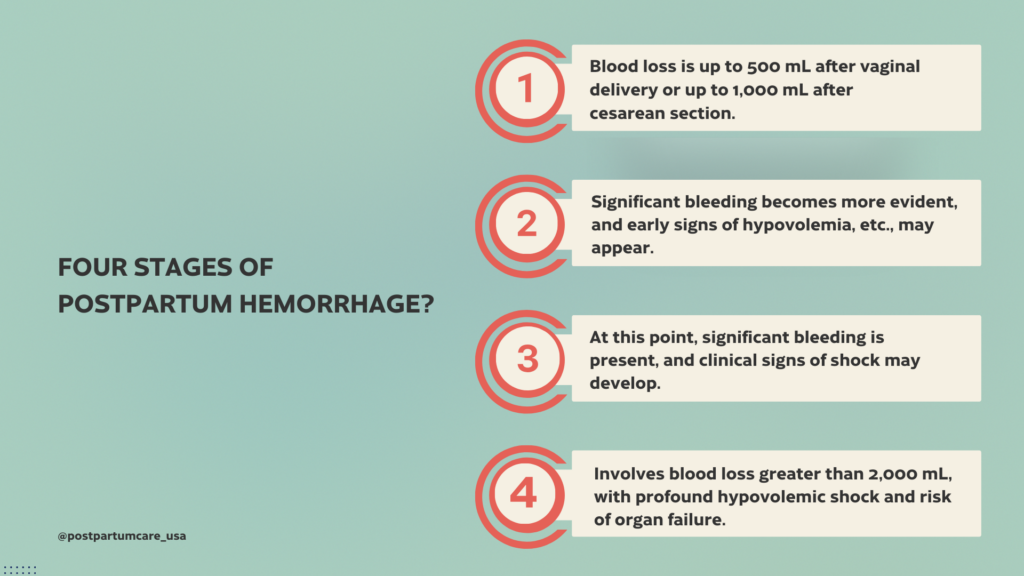
What Are the Four Stages of Postpartum Hemorrhage?
Postpartum hemorrhage is categorized into stages to guide treatment. The most common symptom is persistent, excessive vaginal bleeding after delivery. Uncontrolled bleeding, decreased blood pressure, and a decrease in red blood cell count are key clinical signs. Swelling and pain in the vagina and nearby area may occur if bleeding is from a hematoma. Symptoms may resemble other health conditions, so a healthcare provider is needed for diagnosis. Feeling lightheaded, dizzy, faint, extreme tiredness, new or worsening belly pain, and blurry vision can also be symptoms.
Stage 1
blood loss is up to 500 mL after vaginal delivery or up to 1,000 mL after cesarean section. At this stage, significant bleeding may not yet be apparent, and vital signs are usually stable.
Stage 2
Stage 2 involves blood loss between 1,000 and 1,500 mL. Here, significant bleeding becomes more evident, and early signs of hypovolemia, such as tachycardia and mild hypotension, may appear.
Stage 3
Stage 3 is defined by blood loss between 1,500 and 2,000 mL. At this point, significant bleeding is present, and clinical signs of shock may develop. Management may require transfusion of packed red blood cells as part of a massive transfusion protocol. Uterine tamponade, such as a Bakri balloon, and uterine compression sutures may be used to control bleeding if initial measures fail.
Stage 4
Stage 4 involves blood loss greater than 2,000 mL, with profound hypovolemic shock and risk of organ failure. Aggressive interventions, including continued transfusion of packed red blood cells, uterine tamponade, and uterine compression sutures during laparotomy, are often necessary to achieve hemostasis and may be considered as alternatives to hysterectomy in severe cases.
Monitoring how much blood is lost and recognizing significant bleeding at each stage is critical for timely intervention and improved outcomes. These stages help providers determine how urgently to act. But they do not predict how long recovery may take.
The Long-Lasting Effects of Severe Blood Loss and Blood Transfusion
Here is what we want every mama to understand:
Severe blood loss during birth does not just affect you in the hospital. It can lead to maternal morbidity and severe maternal morbidity, including long-term complications that may impact your health and recovery.
It can affect you for months. Sometimes even years.
Severe postpartum hemorrhage can result in rare but serious complications such as Sheehan syndrome (postpartum hypopituitarism), as well as intrauterine synechiae, preterm delivery, and infertility.
When you lose a large amount of blood, you lose:
- Iron
- Ferritin (stored iron)
- B vitamins
- Electrolytes
- Trace minerals
- Red blood cells
- Plasma proteins
Your body uses these nutrients to:
- Produce energy
- Regulate hormones
- Support thyroid function
- Stabilize mood
- Maintain milk supply
- Support brain function
When these levels are not rebuilt properly, postpartum nutrient depletion can set in.
And this is where we see long-term symptoms show up.
Postpartum Nutrient Depletion After Hemorrhage
Postpartum nutrient depletion happens when your body’s stores are drained and not replenished.
After a hemorrhage, this risk is much higher.
We regularly see mamas with a history of postpartum hemorrhage struggling with:
- Extreme fatigue that does not improve with sleep
- Anxiety or panic symptoms
- Brain fog
- Hair loss
- Low milk supply
- Dizziness
- Heart palpitations
- Depression
- Thyroid dysfunction
- Irregular cycles months later
Often they were told, “Your labs are normal.” But normal is not the same as optimal.
When iron stores remain low, your body cannot carry oxygen efficiently. This impacts every cell. It impacts your brain. It impacts your hormones.
If left untreated, these imbalances can linger for years.
Postpartum Hemorrhage Recovery: What True Healing Looks Like
Postpartum hemorrhage recovery is not just about stopping the bleeding.
It is about rebuilding your foundation.
1. Rebuilding Iron and Nutrient Stores
This may require:
- Targeted iron supplementation
- Monitoring ferritin levels
- Replenishing B vitamins
- Supporting adrenal and thyroid function
- Protein intake
- Hydration and electrolytes
One iron panel right after delivery is not enough. Recovery takes time and monitoring. We typically recommend mother’s to get in-depth labwork around 6-8 weeks postpartum, whether you had a hemorrhage or not.
At our clinic, we also wamt to monitor your labs on a routine basis to make sure treatment is effective.
2. Hormonal Support
Severe blood loss places significant stress on your endocrine system. When your body loses a large volume of blood, it shifts into survival mode. Cortisol (your stress hormone) rises to compensate, and other hormone systems may temporarily downregulate.
One of the most commonly affected systems is the thyroid.
Your thyroid depends on adequate iron and nutrient stores to function properly. When iron levels drop after a hemorrhage, your thyroid may struggle to convert and utilize hormones efficiently. Over time, this can contribute to subtle thyroid dysfunction.
We often see symptoms show up months later, such as:
- Ongoing fatigue that does not improve with rest
- Hair thinning or shedding
- Cold intolerance
- Brain fog
- Low mood
- Irregular or heavy cycles
The key takeaway is this: if you had a postpartum hemorrhage and months later you still do not feel like yourself, it is worth evaluating your thyroid and broader hormone function. Subtle shifts can have a big impact on how you feel day to day.
3. Nervous System Healing
Hemorrhage can also be traumatic.
Some women experience:
- Flashbacks
- Fear of future births
- Hypervigilance
- Health anxiety
Emotional recovery matters just as much as physical recovery.
4. Individualized Monitoring
Mild cases may recover in weeks. Severe cases can take months.
There is no universal timeline.
What matters is that your symptoms are taken seriously.
Emotional Support and Counseling
Experiencing postpartum hemorrhage (PPH) can be deeply traumatic—not just physically, but emotionally as well. The suddenness and severity of excessive bleeding can leave lasting emotional scars for mothers and their families. That’s why emotional support and counseling are just as important as physical recovery.
Many women who go through postpartum hemorrhage PPH benefit from psychological support to help process the shock and fear that often accompany the experience. Counseling—whether one-on-one or in a group setting—can provide a safe space to talk through emotions, fears, and any lingering anxiety.
Support groups connect women who have faced similar challenges, offering understanding and reassurance that they are not alone. Education about postpartum hemorrhage PPH, its causes, and what to expect during recovery can also help reduce anxiety and empower women to take charge of their healing.
Family support is crucial. Loved ones should be informed about the potential emotional and physical effects of PPH, so they can offer meaningful help and encouragement. Follow-up care with healthcare providers is essential—not just to monitor physical healing, but to check in on emotional well-being.
Screening for anxiety and depression should be a routine part of post-PPH care, as these conditions are common after a traumatic birth experience. If needed, women should be referred to mental health services for additional support.
For those planning future pregnancies, extra emotional support and reassurance from healthcare providers can help ease fears and build confidence. Debriefing after the experience—talking through what happened and why—can be an important step in emotional recovery.
Finally, self-care matters. Encouraging relaxation techniques, mindfulness, and stress management can help women cope with the emotional aftermath of postpartum hemorrhage PPH. Remember, healing is not just about the body—it’s about the mind and heart, too.
When Should You Seek Help?
If you had a postpartum hemorrhage and are experiencing:
- Ongoing heavy bleeding
- Persistent dizziness
- Severe fatigue
- Mood changes
- Hair loss
- Anxiety
- Irregular cycles
- Feeling “not like yourself”
It is worth getting evaluated.
Not just for survival. For full recovery.
Can You Have Another Baby After Postpartum Hemorrhage?
Yes, many women go on to have healthy future pregnancies.
But it is important to:
- Inform your provider of your history
- Have a proactive birth plan
- Monitor iron levels during pregnancy
- Support nutrient stores before delivery
Planning ahead can make a meaningful difference.
The Bottom Line
Postpartum hemorrhage recovery does not end when the bleeding stops.
Severe blood loss can trigger postpartum nutrient depletion. It can impact hormones, mood, thyroid function, energy, and overall health for years if not properly addressed.
You survived.
Now your body deserves to rebuild.
If you experienced postpartum hemorrhage and still feel exhausted, anxious, foggy, or off, it may not just be motherhood.
It may be depletion. And depletion is something we can test for, treat, and support.
Take our quiz to see if you qualify for our program and meet with a member of our team to learn more.
Frequently Asked Questions
What are risk factors for postpartum hemorrhage?
Ans: Risk factors include prolonged labor, cesarean birth, having multiple babies, a large baby, infection, or placental problems like placenta accreta or placental abruption. Blood clotting disorders and a history of postpartum hemorrhage can also increase the risk. In some cases, it can happen even without clear risk factors.
How is postpartum hemorrhage treated in a hospital?
Doctors act quickly to stop the bleeding using uterine massage, medications to help the uterus contract, and IV fluids. Blood transfusions may be given if significant blood loss occurs. In more serious cases, procedures may be used to remove a retained placenta or control bleeding inside the uterus.
How to prevent postpartum hemorrhage during delivery?
Prevention often includes active management after delivery, such as giving medications that help the uterus contract. Healthcare providers also monitor blood loss closely and identify risk factors during pregnancy. Being prepared allows the medical team to respond quickly if bleeding begins.
What are the complications of severe PPH?
Severe PPH can lead to major blood loss, iron deficiency, and extreme fatigue during recovery. In rare cases, it may cause organ stress or hormonal complications like Sheehan syndrome. Without proper recovery support, symptoms can last for months.
What are the complications of severe PPH?
Seek emergency care if you experience very heavy bleeding, large clots, dizziness, fainting, or a rapid heartbeat after childbirth. Feeling weak, shaky, or lightheaded can also be warning signs. Immediate treatment is important to prevent serious complications.
Pin This For Later:
Postnatal Depletion
Meet the Team
Our Services
Supplements
A virtual healthcare clinic that helps postpartum mamas recover from postnatal depletion syndrome with a holistic approach.
Welcome to Postpartum Care USA



Get in touch