
Castor oil has gained attention among postpartum mothers seeking natural remedies for belly concerns, but the scientific evidence for its effectiveness remains limited. While this vegetable oil offers proven moisturizing benefits and may support skin healing, it’s important to understand what castor oil can and cannot realistically accomplish for your postpartum recovery.
Many new mothers wonder if castor oil’s benefits extend to tightening loose skin, reducing stretch marks, or healing cesarean scars. The truth is more nuanced than social media claims suggest, and safety considerations are paramount when you’re breastfeeding or recovering from childbirth.
This post explores the health benefits of castor oil for postpartum belly concerns, proper application methods, safety considerations, and realistic expectations for results.

What Is Castor Oil and How Can It Help Your Postpartum Belly?
Castor oil is a vegetable oil extracted from the seeds of the castor plant (Ricinus communis), also known as the castor bean plant. This edible oil contains nearly 90% ricinoleic acid, a monounsaturated fatty acid that gives castor oil its unique properties and potential health benefits.
Unlike motor oil or other industrial oils, pure castor oil has been used medicinally for centuries. The ricinoleic acid content provides anti inflammatory properties that may benefit common postpartum belly concerns including loose skin, stretch marks, and tissue inflammation from pregnancy and childbirth.
However, it’s crucial to set realistic expectations. While castor oil works as an effective moisturizer and may support skin repair, it cannot tighten abdominal muscles or provide dramatic skin tightening effects. The extraction process preserves the fatty acids that make castor oil beneficial, but no scientific research demonstrates significant belly “tightening” from topical application.
Castor oil may help your postpartum belly by:
- Deeply moisturizing stretched abdominal skin
- Supporting the natural wound healing process
- Reducing skin inflammation through its anti-inflammatory properties
- Improving skin texture and elasticity over time
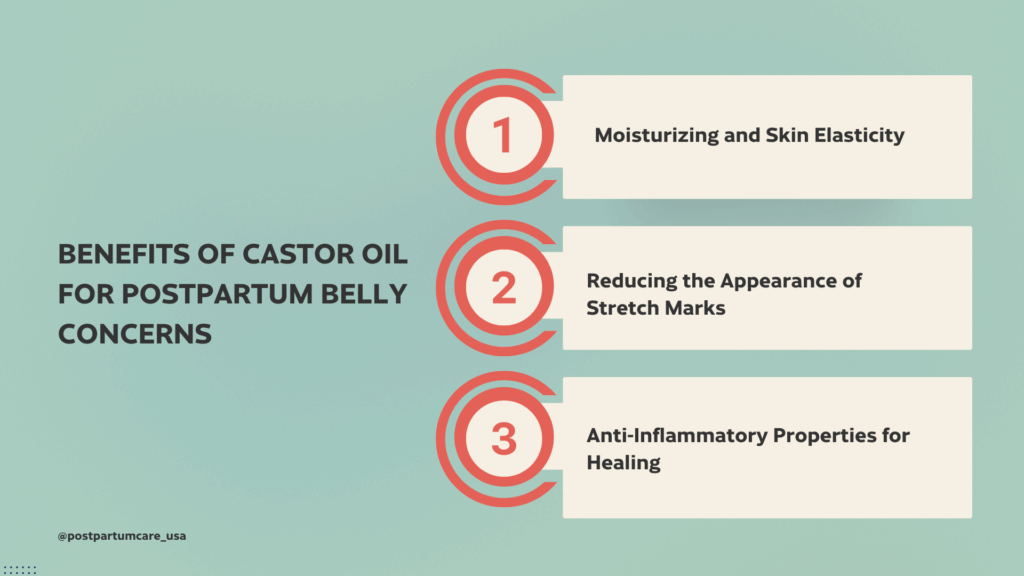
Benefits of Castor Oil for Postpartum Belly Concerns
Moisturizing and Skin Elasticity
The fatty acids in castor oil, particularly ricinoleic acid, provide exceptional moisturizing properties for dry skin that commonly affects postpartum mothers. When applying castor oil to your belly, these fatty acids penetrate deeply to hydrate stretched abdominal skin and may help improve skin elasticity over time.
Compared to coconut oil or other carrier oil options, castor oil’s molecular structure allows for deeper penetration. This makes it particularly effective for maintaining healthy skin during breastfeeding when your body reacts to hormonal changes and nutrient depletion.
The use of castor oil as a moisturizer is well-established, though you should avoid putting castor oil on areas where it might clog pores or cause clogged pores if you’re prone to skin issues.
Reducing the Appearance of Stretch Marks
Stretch marks form during pregnancy when rapid belly expansion causes skin to stretch beyond its elastic capacity. While no topical treatment can completely eliminate stretch marks, castor oil may help improve their appearance through consistent moisturization and its potential wound healing properties.
The effects of castor oil on stretch marks are primarily related to keeping skin hydrated and potentially supporting skin repair processes. However, scientific evidence for dramatic stretch mark improvement is limited. Most women who use castor oil for this purpose report subtle improvements in skin texture and color over 6-12 weeks of consistent application.
Setting realistic expectations is important: castor oil may help existing stretch marks become less noticeable but cannot make them disappear entirely.
Anti-Inflammatory Properties for Healing
Ricinoleic acid provides significant anti inflammatory properties that may benefit postpartum healing. This active ingredient can help reduce skin inflammation and may support the healing process for cesarean scars and general tissue recovery.
For mothers recovering from C-sections, castor oil’s anti inflammatory effects might help with scar healing once the incision is fully closed and healed. However, never apply castor oil to fresh wounds or open incisions, as this could interfere with proper healing or cause infection.
The anti inflammatory properties of castor oil may also help with general tissue recovery and could potentially ease minor joint pain or muscle discomfort associated with postpartum physical changes.
How to Safely Use Castor Oil on Your Postpartum Belly
Applying castor oil safely requires following proper application methods and considering your postpartum recovery status. Here’s how to use castor oil effectively:
Basic Application Method:
- Start with pure castor oil from a reputable source
- Perform a patch test on a small skin area first
- For sensitive postpartum skin, dilute castor oil with a carrier oil like coconut oil
- Apply a thin layer to clean, dry skin
- Gently massage in circular motions
- Allow to absorb for 20-30 minutes before clothing contact
Castor Oil Pack Method:
For deeper penetration and relaxation benefits, try castor oil packs:
- Soak a clean cloth in castor oil
- Place over your belly area
- Cover with plastic wrap
- Apply a heating pad on low heat for 20-45 minutes
- Rest and relax during application
Best application times include after showering when skin is clean and before bed when you can allow extended absorption time. Always wash hands thoroughly after applying castor oil, especially when handling your baby.
Safety Considerations for Postpartum Mothers
Breastfeeding Safety
Using castor oil topically is generally safe while breastfeeding, but important precautions apply. Never drink castor oil or ingest castor oil during breastfeeding, as it can cause severe abdominal cramping and diarrhea, potentially affecting milk production and your overall health.
When rub castor oil on your belly:
- Wash hands thoroughly before touching your baby or breasts
- Avoid applying near breast areas where baby might contact
- Don’t use castor oil on nipples or chest
- If any gets on skin your baby touches, wash the area first
The Food and Drug Administration considers topical castor oil use safe for most people, but oral consumption requires medical supervision, especially during breastfeeding.
C-Section Recovery Considerations
If you delivered via cesarean section, wait until your healthcare professional confirms your incision is fully healed before applying castor oil near the surgical site. This typically occurs 6-8 weeks post-surgery, but healing timelines vary.
When ready to use castor oil for scar healing:
- Start application away from the incision initially
- Gradually work closer to the scar as comfort allows
- Watch for any signs of skin irritation or allergic reactions
- Consult your healthcare provider if you have concerns
Some mothers find castor oil packs particularly soothing for C-section recovery, but always prioritize your doctor’s wound care instructions over natural remedy advice.
Potential Side Effects and Allergic Reactions
While generally safe for topical use, castor oil can cause side effects in some people:
Common issues include:
- Skin irritation or redness
- Allergic reaction in sensitive individuals
- Clogged pores if you’re acne-prone
- Heavy feeling on skin due to oil’s thickness
Signs to watch for:
- Persistent redness or itching
- Rash or hives
- Burning or stinging sensations
- Worsening of any existing skin conditions
If your body reacts negatively to castor oil, discontinue use immediately. Too much castor oil applied at once can also cause skin issues, so start with small amounts and build up gradually.
What to Realistically Expect from Castor Oil Treatment
Setting appropriate expectations is crucial for satisfaction with castor oil treatment. Most women notice moisturizing effects within 1-2 weeks of consistent use, while potential improvements in skin texture or stretch mark appearance typically require 4-8 weeks of regular application.
Realistic timeline expectations:
- Week 1-2: Improved skin hydration and softness
- Week 4-6: Potential improvements in skin texture
- Week 8-12: Possible subtle changes in stretch mark appearance
Factors affecting results:
- Consistency of application
- Individual skin type and healing capacity
- Severity of skin changes from pregnancy
- Genetic factors influencing skin elasticity
- Overall health and nutrition status
Remember that castor oil supports skin health but cannot tighten loose abdominal muscles or provide dramatic body contouring effects. For significant physical changes, you’ll need to incorporate exercise, proper nutrition, and possibly professional treatments.
Additional Postpartum Belly Recovery Approaches
While castor oil may support skin health, comprehensive postpartum belly recovery requires a multi-faceted approach:
Physical recovery:
- Gentle core strengthening exercises approved by your healthcare provider
- Physical therapy for diastasis recti or significant muscle separation
- Gradual return to fitness activities as cleared medically
Nutritional support:
- Adequate protein for tissue repair
- Essential fatty acids for skin health
- Proper hydration to support milk production and skin elasticity
- Consider postpartum vitamins if nutrient depleted
Other beneficial treatments:
- Vitamin E oil for additional antioxidant benefits
- Specialized postpartum skin care products
- Professional massage therapy
- Adequate sleep to support healing processes
Natural remedies that complement castor oil:
- Treating acne with gentle, pregnancy-safe products
- Using natural remedies for dry scalp if experiencing postpartum hair changes
- Addressing chronic constipation through dietary changes rather than relying on castor oil’s laxative properties
Will Castor Oil Really Help Your Postpartum Belly?
The scientific evidence for castor oil’s benefits in postpartum belly recovery is mixed. While castor oil’s moisturizing and potential anti inflammatory effects are well-documented, claims about significant skin tightening or stretch mark elimination lack robust scientific research support.
What we know definitively:
- Castor oil effectively moisturizes and may support wound healing
- Its anti inflammatory properties could benefit tissue recovery
- Regular use may improve skin texture and comfort
- It’s generally safe for topical postpartum use
What remains unclear:
- Extent of improvement possible for stretch marks
- Timeline for visible changes in skin appearance
- Comparative effectiveness versus other natural treatments
- Long-term benefits for skin elasticity
The balanced perspective: Castor oil can be a valuable component of your postpartum self-care routine, particularly for skin moisturization and comfort. However, it should be viewed as one tool among many rather than a miracle solution for postpartum belly concerns.
For personalized advice about using castor oil or other natural remedies during your postpartum recovery, consult with a healthcare professional familiar with your medical history and recovery progress.
Conclusion
Castor oil offers legitimate benefits for postpartum belly care, particularly as a moisturizer and potential supporter of skin healing. Its rich concentration of ricinoleic acid provides anti inflammatory properties that may help with tissue recovery and comfort during the postpartum period.
However, realistic expectations are essential. While castor oil may improve skin hydration, texture, and potentially the appearance of stretch marks, it cannot dramatically tighten loose skin or replace comprehensive postpartum recovery approaches including exercise, nutrition, and proper medical care.
Safety considerations are paramount, especially for breastfeeding mothers. Always patch test before use, avoid oral consumption, and consult your healthcare provider about incorporating castor oil into your postpartum care routine.
Remember that your postpartum body has accomplished something extraordinary. Be patient with yourself as you navigate recovery, and consider castor oil as one gentle, natural tool to support your healing journey rather than expecting dramatic transformation.
Most importantly, if you have concerns about your postpartum recovery or any unusual symptoms, prioritize professional medical guidance over self-treatment with natural remedies alone.
Frequently Asked Questions for Castor Oil
1. Is castor oil safe for postpartum belly use?
Yes, castor oil is generally safe to use on your postpartum belly when applied topically. Just do a patch test first and avoid using it on open wounds or fresh C-section incisions. If you notice irritation or redness, stop using it and consult your healthcare provider.
2. What are the real benefits of loose skin or stretch marks?
Castor oil mainly helps by deeply moisturizing the skin and supporting natural healing. Over time, this may improve skin texture and make stretch marks look less noticeable. However, it won’t completely remove stretch marks or tighten abdominal muscles.
3. How do I apply castor oil packs correctly?
To use a castor oil pack, soak a clean cloth in castor oil and place it on your belly. Cover it with plastic wrap and apply gentle heat with a heating pad for about 20–45 minutes. This can help the oil absorb better and provide a relaxing effect.
4. Can breastfeeding moms use it without risks?
Breastfeeding moms can safely use castor oil on the skin, but it should never be taken orally. Make sure to wash your hands after applying it and avoid areas near the breasts where your baby might come into contact with it.
5. How long until I see results, and what if it irritates?
Most women notice softer, more hydrated skin within a couple of weeks. Subtle improvements in texture or stretch marks may take 4–8 weeks with consistent use. If your skin becomes itchy, red, or irritated, stop using the oil right away.
Pin This For Later:


Postnatal Depletion
Meet the Team
Our Services
Supplements
A virtual healthcare clinic that helps postpartum mamas recover from postnatal depletion syndrome with a holistic approach.
Welcome to Postpartum Care USA


Get in touch